Burnout in December: How to Spot It Early and Protect Your Energy Before You Crash
Holiday burnout isn't inevitable. Learning to notice your early warning signs and respond with kindness may prevent the post-holiday exhaustion so many experience in January.
Around mid-December each year, I notice a particular shift in my sessions. People arrive looking tired in a way that sleep doesn't seem to fix. They describe feeling overwhelmed by their own calendars, resentful of commitments they genuinely wanted to make, or oddly detached from events that should feel joyful. When I gently name what I'm observing (that they might be approaching burnout), the relief is often immediate. "Yes. That's exactly what this is."
The challenge with holiday burnout is that it disguises itself as busyness, and busyness gets celebrated this time of year. We're supposed to be bustling and festive and full of energy for gatherings and gift-giving and making memories. Acknowledging exhaustion can feel like failing at something everyone else seems to manage effortlessly. But here's what I've learned from December conversations: most people are struggling more than they're showing, and recognizing burnout early gives you the chance to adjust course before January arrives with you already depleted.
Five Subtle Signs Therapists Notice First
Burnout doesn't usually announce itself with a dramatic collapse. It starts quietly, with small shifts that are easy to dismiss as temporary stress. Here are the early warning signs I watch for, both in my work with others and in my own experience:
Irritability that feels disproportionate. You snap at your partner over something minor, feel unreasonably annoyed by holiday music, or notice yourself becoming critical of people who are simply excited about the season. This emotional rawness often signals that your reserves are running low.
Dread about events you planned to enjoy. You committed to the holiday party or the family gathering or the festive outing weeks ago, but as the date approaches, you feel a sinking heaviness rather than anticipation. You're not excited. You're calculating how early you can leave.
Decision fatigue about small things. What to wear, what to bring, which route to take. Choices that normally feel automatic suddenly require enormous mental energy. Your brain is overloaded, and even minor decisions feel like too much.
Physical tension you can't shake. Your shoulders stay tight, your jaw clenches, headaches appear more frequently, or your sleep becomes restless despite being exhausted. Your body is trying to tell you something your mind might be ignoring.
Withdrawal from genuine connection. You're attending events but feeling distant, going through motions without really being present. Conversations feel effortful. You're there, but you're not actually there.
If two or more of these resonate, it's worth pausing to assess honestly where you are and what you need.
A Two-Minute Daily Check-In Tool
One of the most effective practices I share with people approaching burnout is remarkably simple: a brief daily check-in that grounds you in present-moment awareness before you've fully entered the day's demands.
Find a quiet moment—perhaps before you get out of bed, during your first coffee, or right after you arrive at work. Close your eyes if that feels comfortable and take three slow breaths. Then ask yourself two questions:
"What am I noticing in my body right now?" Scan from your head down to your feet. Is there tension, heaviness, restlessness, fatigue? You're not trying to fix anything yet. It’s all about noticing.
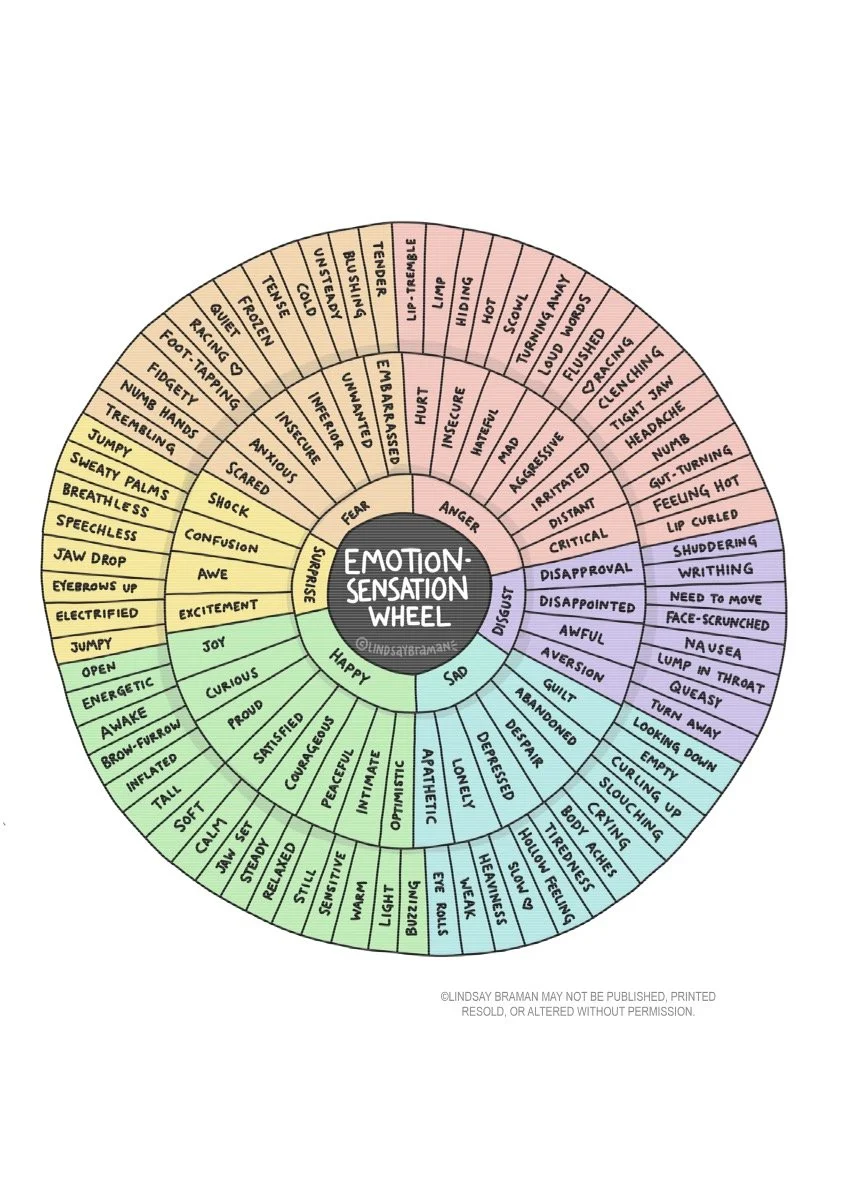
"What emotion is most present?" Name it as specifically as you can. Not just "stressed" but perhaps anxious, resentful, sad, overwhelmed, or numb. Sometimes several emotions are layered together. I’ve added an emotions wheel at the bottom that might help you understand and explore your emotions more clearly.
This isn't about judgment or immediate problem-solving. You're simply developing the skill of noticing what's true before the day sweeps you away. Over time, this awareness helps you catch burnout earlier and respond more intentionally rather than pushing through until you crash.
How to Say No or Scale Back Mid-Season
Here's where many people get stuck: they recognize they're overwhelmed but feel trapped by commitments already made. The thought of canceling or scaling back triggers guilt about disappointing others or letting people down. This is where values clarification becomes helpful.
In Acceptance and Commitment Therapy, we distinguish between actions driven by values and actions driven by obligation or avoidance of discomfort. When you're considering whether to maintain a commitment, ask yourself: "Is this genuinely aligned with what matters most to me, or am I doing it to avoid disappointing someone or because I think I should?"
If the honest answer is obligation rather than values, you have permission to adjust. Here are some ways to do that with kindness:
"I'm realizing I overcommitted this month and need to scale back to take care of myself. I won't be able to make it to the gathering, but I'm sending love and hope it's wonderful."
"I'd still like to see you, but I need to shorten our visit. Could we do coffee for an hour instead of the full afternoon?"
"I'm going to bow out of hosting this year. I'm not in a place to do it justice, and I'd rather show up well to what I can genuinely manage."
Notice these statements don't apologize excessively or justify endlessly. They're clear, they're honest, and they prioritize your sustainability over others' potential disappointment. People who care about you will understand. People who don't understand are likely not considering your wellbeing in the first place.
Mini Recovery Rituals for Busy Days
You don't need a spa day or a weekend retreat to begin restoring your energy. Small, intentional pauses throughout your day create space for recovery. Here are practices I return to frequently:
The five-minute reset. Step outside, even briefly. Feel the cold air, notice the sky, take several deep breaths. This simple shift in environment can interrupt the stress cycle.
The grounding exercise. Notice five things you can see, four you can hear, three you can touch, two you can smell, one you can taste. This brings you back into your body and the present moment when anxiety is pulling you forward.
The permission slip. Write yourself an actual note: "I have permission to rest" or "I'm allowed to change my mind" or "It's okay to do less." Place it somewhere you'll see it. Sometimes we need external reminders of truths we struggle to believe internally.
The boundary-setting breath. Before responding to a request or invitation, pause and take one full breath. This creates just enough space to check in with yourself before automatic people-pleasing takes over.
The micro-celebration. Acknowledge something you managed today, however small. You showed up. You were kind. You held a boundary. This matters, especially when you're depleted.
If you want to learn more on grounding, check out my free Grounding Toolkit.
Creating a January Re-Entry Plan
One pattern I've observed repeatedly: people push hard through December, collapse in early January, and then feel frustrated that the new year starts with exhaustion rather than renewal. Planning for sustainable re-entry prevents this cycle.
Before the holidays fully begin, look ahead to early January and block out recovery time. This might mean taking an extra day off after New Year's before returning to work, or scheduling nothing social for the first full weekend of January. Protect this time as fiercely as you'd protect an important meeting.
Also consider what simple routines help you feel grounded—movement, regular sleep, time outdoors, connection with specific people—and plan how you'll gradually reestablish them. You're not trying to launch into ambitious resolutions. You're gently rebuilding the foundation that the holidays may have disrupted.
Finally, practice self-compassion about whatever happened during the busy season. If you snapped at someone, overcommitted, or handled things imperfectly, that's information for next year, not evidence of failure. You were doing your best with the resources you had available.
December doesn't have to end in depletion. When you notice burnout building and respond with honesty rather than pushing through, you're making a choice that serves both your immediate wellbeing and your capacity to be present for what genuinely matters.
If you're recognizing signs of burnout now and want support thinking through how to adjust course, or if you're interested in developing more sustainable approaches to this season and beyond, I'd welcome the conversation. Sometimes having someone alongside you as you learn to notice and honor your limits makes all the difference.